
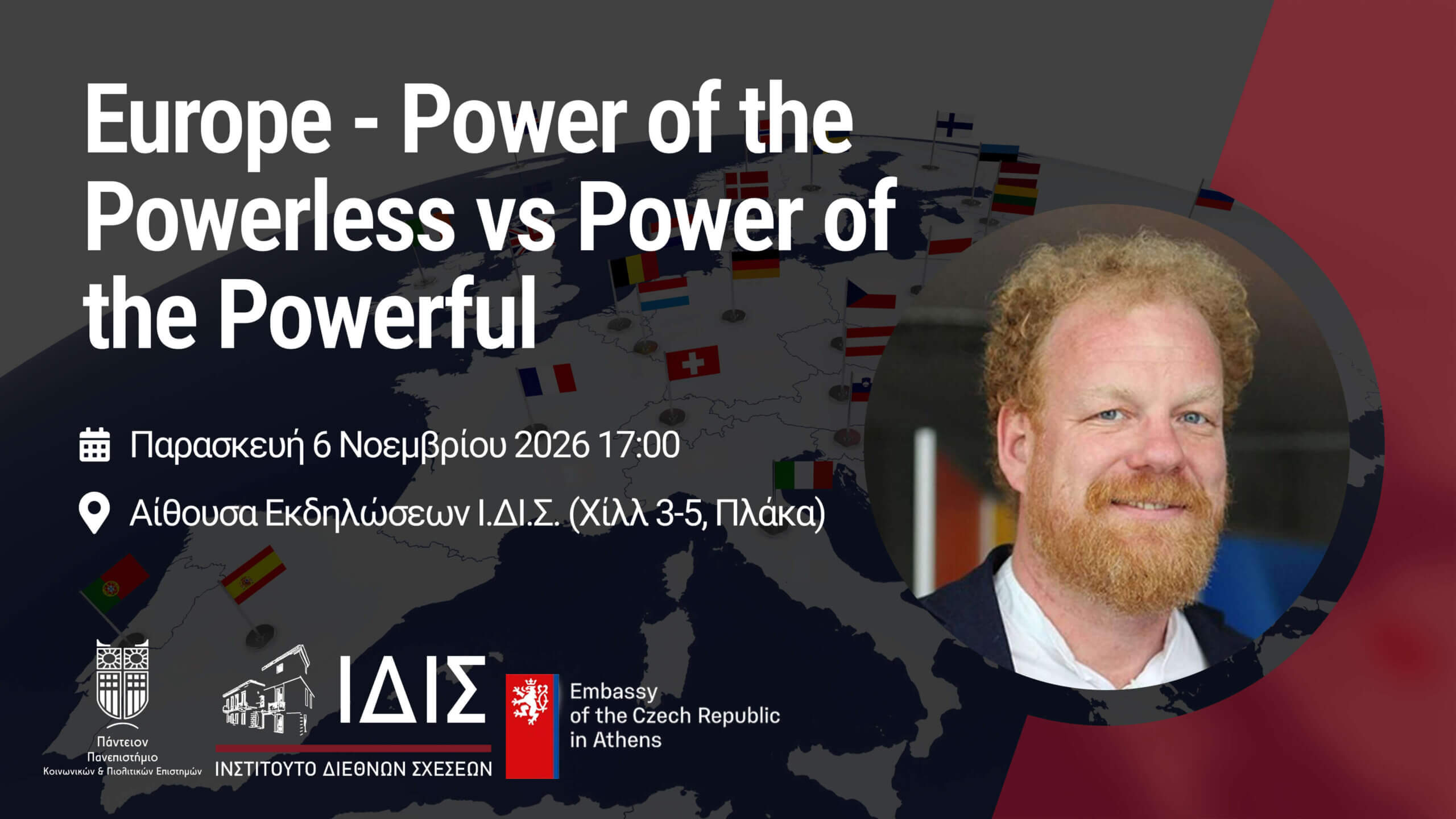
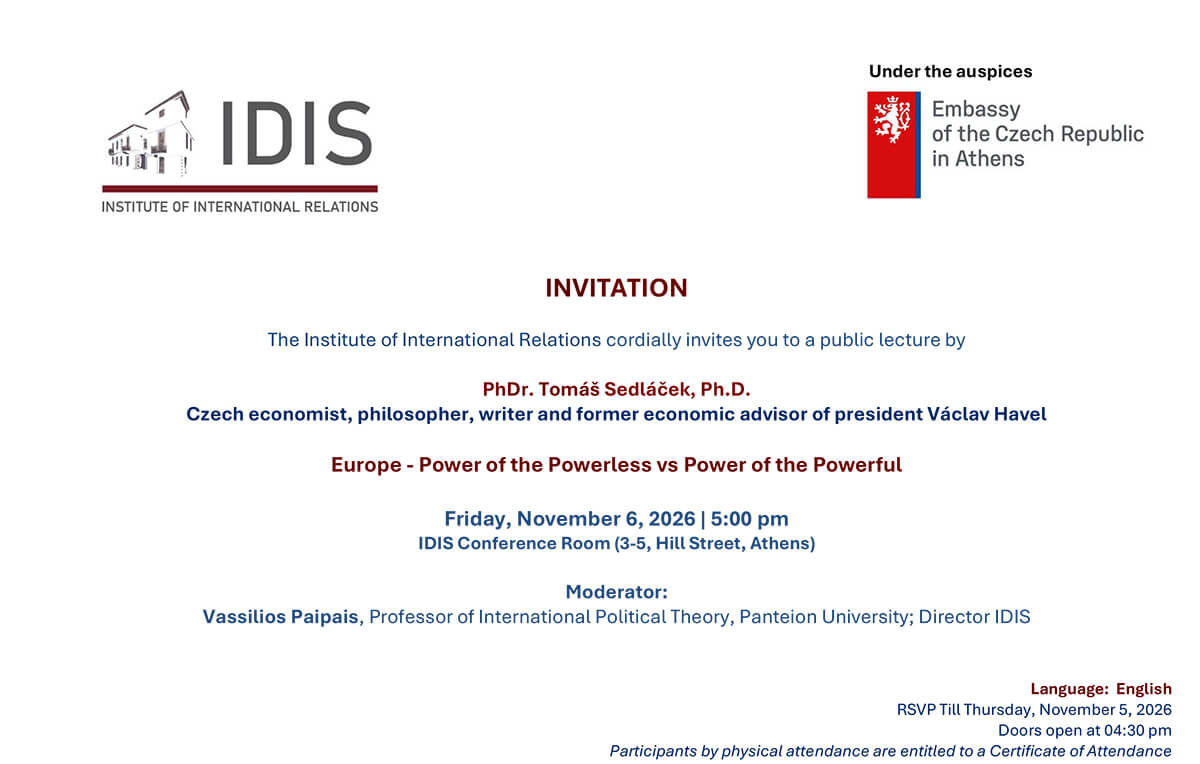
A lecture by Tomáš Sedláček
What makes Europe powerful—and why does it so often feel powerless? In a world increasingly shaped by great-power rivalry, Europe faces a question that is political, economic and deeply philosophical: what kind of power does it need, and what should that power serve?
Tomáš Sedláček explores Europe’s capacity to shape its own future. Can it overcome political fragmentation, address public debt and regain competitiveness? Can it keep pace with China while preserving the freedoms and social commitments that define its way of life? And how can democracy respond to public frustration without yielding to extremism and the appeal of authoritarian certainty?
At the heart of the lecture is Václav Havel’s The Power of the Powerless, brought back into contemporary debate by Mark Carney’s Davos address. Havel’s reflections on truth, responsibility and individual courage raise an urgent question: how can citizens and societies recover their agency within systems that seem beyond their control?
Bringing economics into conversation with philosophy, Sedláček asks whether Europe’s vulnerability also contains a source of renewal. Its future depends on the ability to create prosperity, defend democracy and act together. But it also depends on something harder to measure: a shared understanding of what is worth defending, what progress means, and what Europe still has to offer the world.
Όσοι από τους δια ζώσης συμμετέχοντες το επιθυμούν θα λάβουν βεβαίωση.